Overview

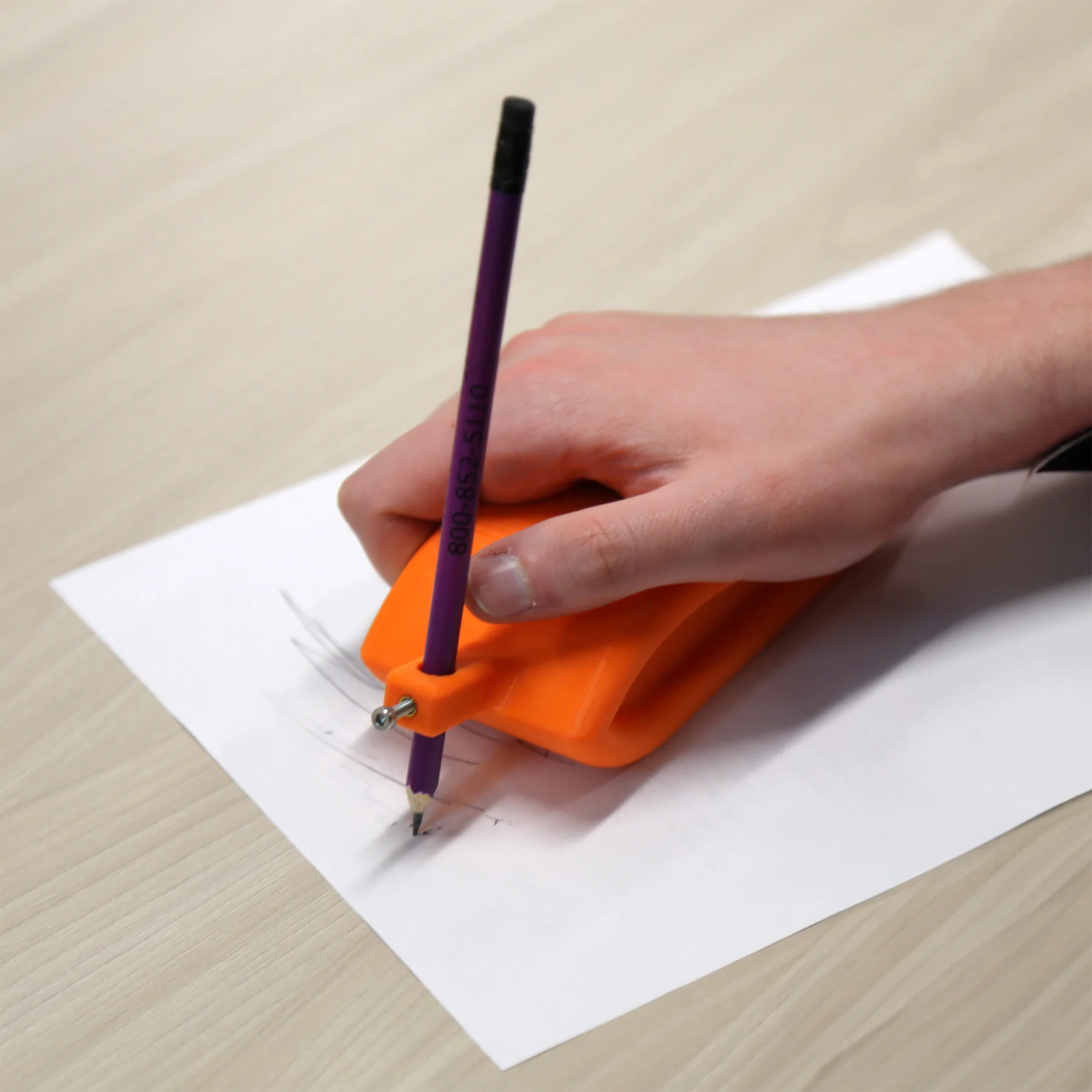
This project will challenge you to design and prototype a writing aid for a user with a physical, sensory or cognitive accessibility need. A writing aid is any tool or device that helps a person write more easily, comfortably, or independently.
Materials Needed
- The writing utensil (pen, marker, pencil, crayon, etc.)
- Modeling materials
- Foam, cardboard, clay, etc.
- Filament (if 3D printing)
- Scissors, ruler, tape
- Something to brainstorm drawings on (paper, whiteboard, etc.)
Learning Objective Phases
-
- Identify writing-related challenges – grip, control, fatigue, stability
- Generate multiple design ideas for a writing aid that addresses these writing challenges
- Select materials and shapes/forms that improve comfort, control and promote usability of the aid
- Design and build a functional writing aid prototype that enables a user to write more efficiently with comfort
- Test the writing aid by observing how it performs while writing
- Refine the design by making changes that improve the experience
Phase 1: Understanding the Writing Challenge
Students recognize common writing challenges and define a focused design problem.
- Discuss what makes writing difficult for some people
- Create a problem statement with goals of what you what difficulties you plan to design a solution for
Phase 2: Ideation and Concept Development
Students will generate and explore multiple writing aid designs.
- Sketch out several ideas of what you think will help solve writing difficulties you previously discussed
- Identify features of these concepts that are worth implementing in the final design
Phase 3: Materials and Design Decisions
Students will make intentional design choices based on writing needs.
- You will select materials that you think will help you prototype your ideas so they can be tested
- Create a final sketch of the design that you plan to fabricate
- Establish a plan on how that design will be physically created
Phase 4: Prototyping the Writing Aid
Students will build a functional protype of their writing aid.
- Start fabricating the design by following the plan you created to make your product
- You can always start with a simpler prototype to test functionality of your design then go back and fabricate a more finalized version
- Make sure the prototype functions and addresses your initial problem statement
Phase 5: Testing Your Design
Students will test their writing aid and evaluate its effectiveness.
- Develop a test plan of how you will test your prototype
- Observe the writing aid being used to write
- Collect feedback on what worked and what needs improvement
Phase 6: Iteration and Redesign
Students will improve their design based on testing and feedback
- Identify changes to improve the design based on feedback from testing
- Modify the prototype to reflect the changes you identified
- Retest the modified prototype to see if it reflects the changes, you identified
- Reflect on the overall process, what did you learn?